> For the complete documentation index, see [llms.txt](https://dreetje-1.gitbook.io/inbox-ai/llms.txt). Markdown versions of documentation pages are available by appending `.md` to page URLs; this page is available as [Markdown](https://dreetje-1.gitbook.io/inbox-ai/actions/action-variables.md).
# Action Variables
Action Variables are placeholders Inbox AI replaces with actual values before they are sent to the AI. See [Templating](/inbox-ai/templating.md) for more information about using them and the default variables available.
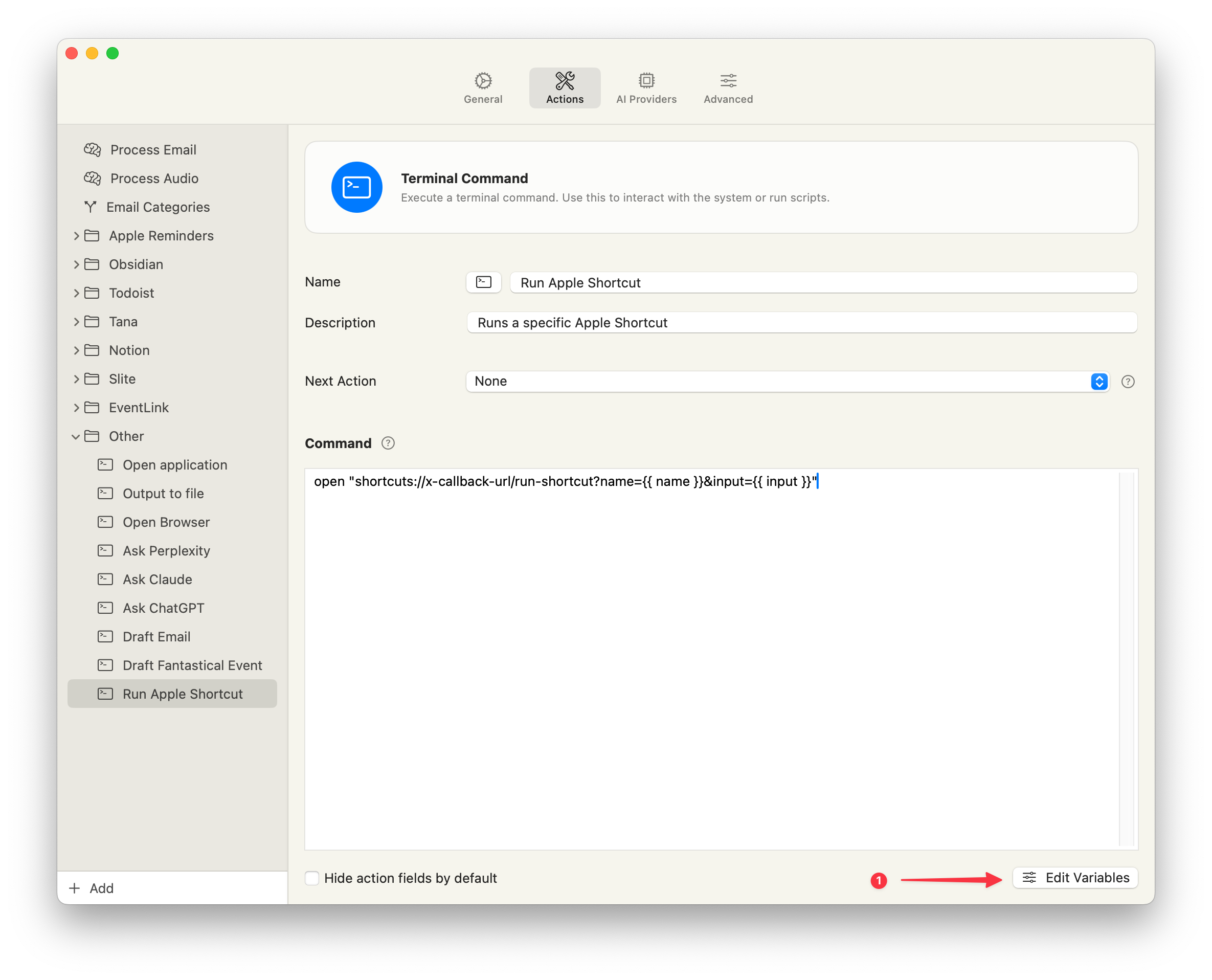
To create and edit variables, click the"'Edit variables" button (1) in the bottom right of most actions.
(1) Click edit variables
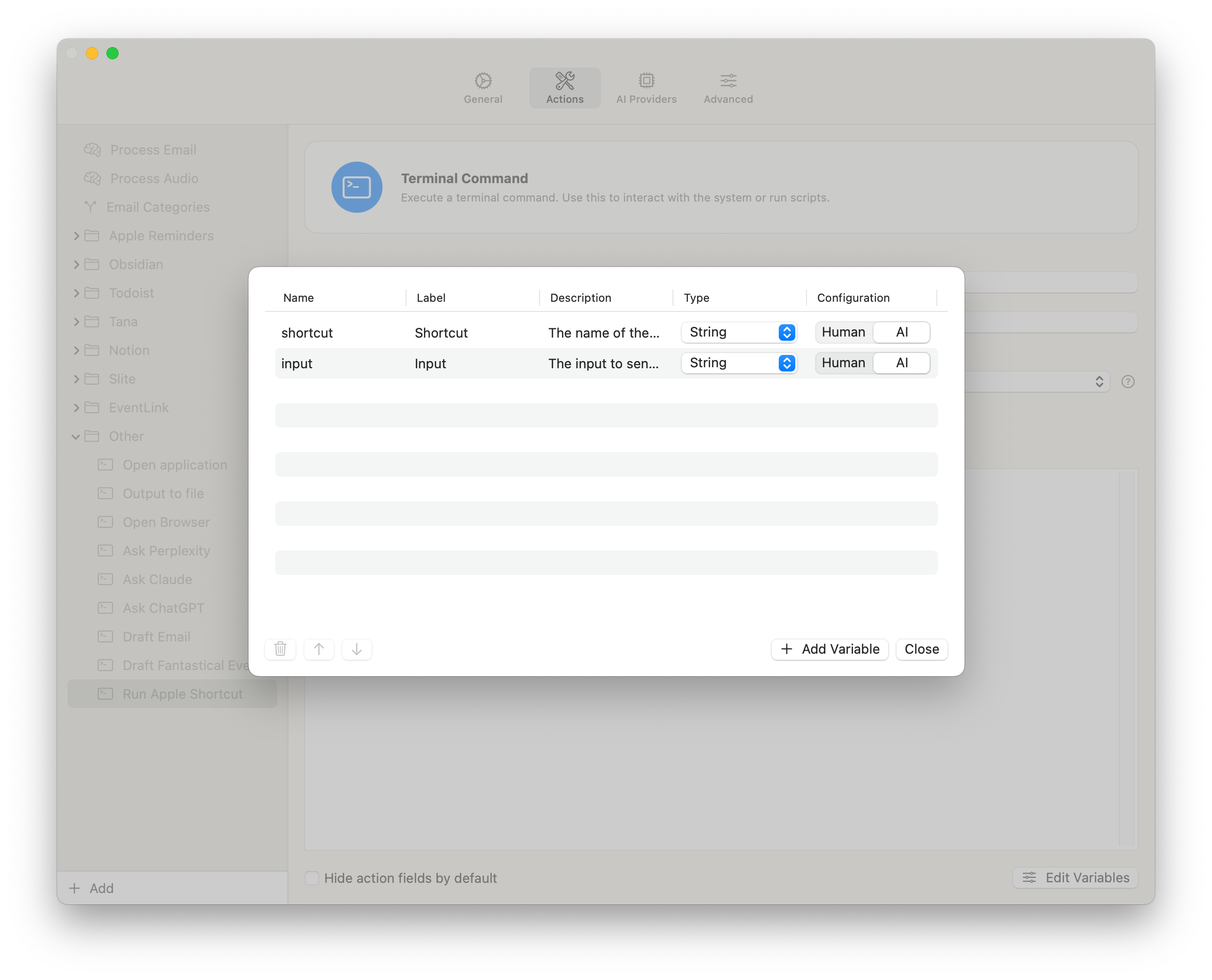
Fill in the variables
The popup shows you a list of the variables available to the selected action. Each variable has:
* A name, which is used to refer to the variable using [Templating](/inbox-ai/templating.md) (i.e `{{ input }}`)
* A label for the AI or Human with a more readable format
* A description for the AI or Human with instructions how to use the variable
* A type:
* String: A piece of text
* Array: A list of strings
* Whether it is intended to be used for by a human or an AI
Human variables result in a configuration screen to show. This allows for easy configuration of actions, especially actions shared with others can benefit from this. A common example of these are API keys.
AI variables are used by Ask AI actions. The AI uses your label and descriprion to do its best filling them.
## Secret Variables
An example of a secret variable in a configuration screen
Human variables that start with the word "secret" (i.e. `secretApiKey`) will automatically show in the configuration screen as passwords.